 Calm Focus
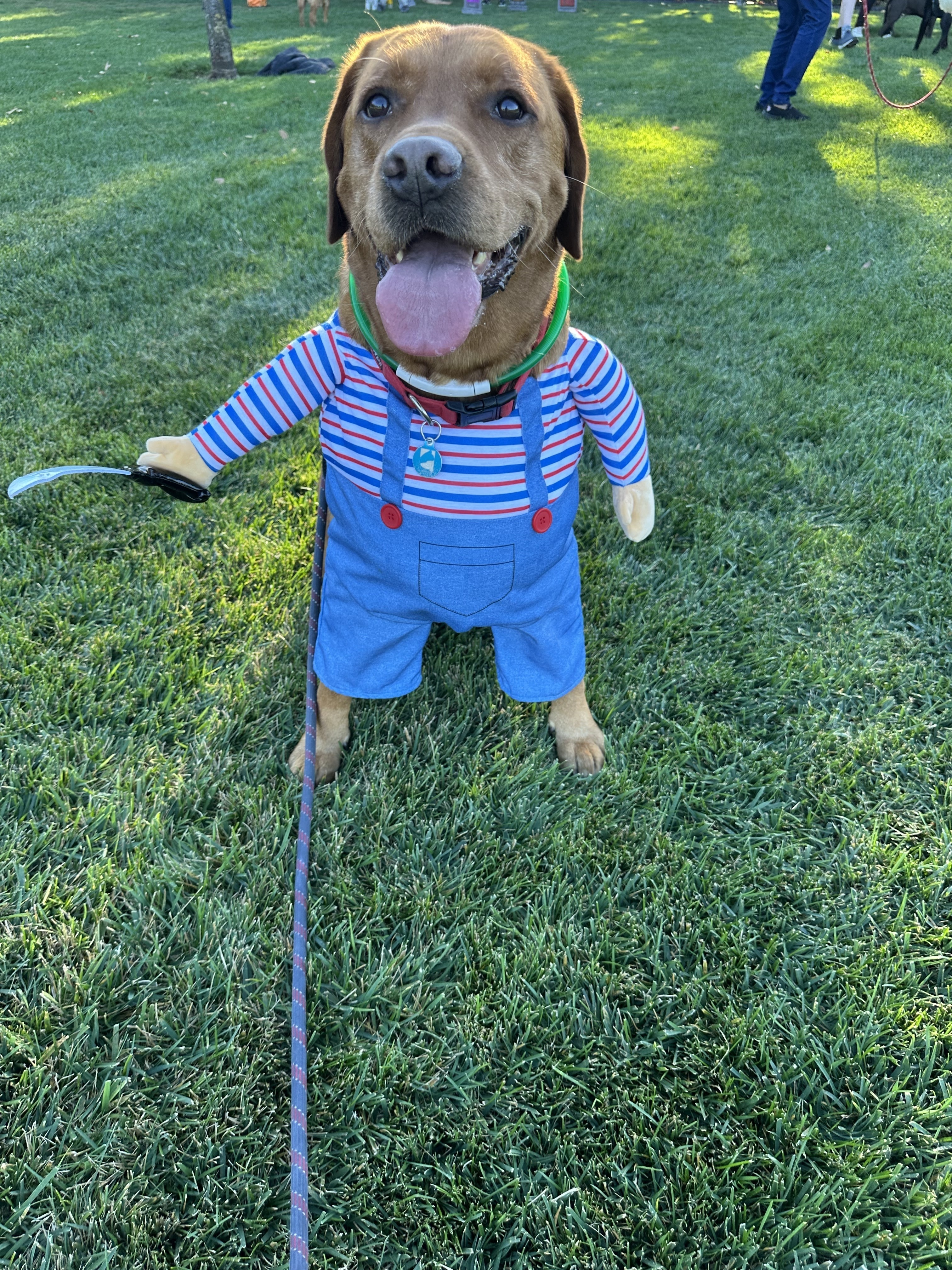
If you have ever watched your dog completely come apart when a loved one walks through the front door, you know exactly the sound. It is loud, chaotic, funny, and somehow moving all at once. In our house, that dog is Cody.
The moment my wife gets close to the door, he knows. He starts vocalizing before the key is even in the lock. Then she steps in and he goes into a full routine: barking, wiggling, dancing sideways, and following her from room to room like he has to make up for every minute she was gone.
Here is the part that took me a while to sit with: he does not do that with me. And I'm the one who is with him for most of the day.
At first that looks a lot like favoritism. But after paying closer attention, I don't think Cody is ranking us at all. He's showing two different things:reunion excitement and security attachment.
The reunion effect: why the joy explodes at the door
Dogs don't experience time the way we do. To us, a workday is a block of hours with a beginning and an end. To a dog, an important person is either here or not here. That makes a homecoming feel enormous.
"She was gone all day" doesn't land for a dog the way it lands for us. It's closer to: "She disappeared. And now she's back."
That return creates a surge. Anticipation turns into relief, relief turns into excitement, and excitement spills out as barking, spinning, wiggling, and what can sound an awful lot like playful growling.
Cody hears my wife at the door
8–15 seconds: ears perk up, tail starts, excitement building before she's inside.
YouTube embed — video ID TBDThis is what makes homecomings so emotionally loud. They aren't greetings. They're reunions.
Why he does this for her and not for me
The short answer is contrast.
I'm with Cody through most of the day, so my presence is just part of his environment. I'm woven into the rhythm of the house. There's no dramatic before-and-after, no emotional swing, no big release.
My wife leaves and comes back. That creates a pattern dogs respond to strongly:
What is always present becomes comforting. What disappears and comes back becomes an event. Neither one is worth more than the other, but only one of them makes noise.
Steady ground
I'm part of Cody's sense of stability, routine, and safety. He doesn't need to celebrate my presence, because in his head I'm already part of home.
The event of the day
Her arrival brings novelty, relief, and release. She's the moment that breaks the rhythm of an otherwise predictable day.
Calm Cody vs. excited Cody
Two-image collage. Left: Cody resting near me. Right: Cody mid-dance with my wife.
cody/cody-calm-vs-excited.jpgIs the barking and growling a problem?
Usually, no. In social, expressive breeds like Labradors, barking and growling during a greeting is often just excited vocalization. It's emotional overflow with a soundtrack.
The thing to read is the whole body, not the noise.
Happy excitement
- Loose, wiggly body
- Tail wagging hard, sometimes the whole back end
- Playful bouncing or dancing
- Quick, expressive vocal sounds
Worth watching more closely
- Rigid, frozen posture
- Hard, fixed stare
- Low sustained growl with visible tension
- Snapping or lunging
With Cody it's clearly the first column. What I'm watching every evening is enthusiasm overflowing out of a dog who cares a lot.
Close-up of Cody's body language
10–20 seconds of tail, posture, and movement — so you can see the difference between excitement and tension.
YouTube embed — video ID TBDFollowing her everywhere: the reconnection phase
Once the door greeting is over, Cody follows my wife around the house. That part is just as interesting as the noise at the door.
Dogs are social animals, and when an important member of the group comes back, a lot of them naturally re-establish closeness. It looks like this:
- Following from room to room
- Checking in visually
- Staying physically close
- Staying alert to that person's movement
It isn't always anxiety. Very often it's simply reconnection — a dog saying, in the only language he has, "you're back, and I'd like to stay near you for a while."
Cody following her through the house
Candid indoor shot — hallway or kitchen, Cody right beside her, looking up.
cody/cody-following-through-house.jpgThe kind of love that's easy to miss
The thing I keep coming back to is that dogs don't show love the same way to every person, and quiet love can be just as deep as loud love.
With my wife, Cody shows celebration. With me, he shows security.
Excitement is visible. It makes noise. It's dramatic and easy to film. But a dog who is relaxed around you, who feels no need to make a scene, is showing something too — he just isn't announcing it.
Excitement isn't always the highest sign of love. Sometimes the deepest bond is the calmest one.
Keeping the greeting joyful without the chaos
There is nothing wrong with a dog who is thrilled to see someone. But if the excitement starts tipping over, a few small routines help.
Keep the entry calm
Don't amplify the energy at the door. A calm entrance keeps the spike from going higher than it needs to.
Give the dog a job
Labs do well with redirected energy. A sit, a place command, or a greeting-toy routine all work.
Reward the calm moments
Attention lands best once he settles, even briefly. That teaches him calm is what brings connection.
Redirect, don't punish
If it's too much, hand him a toy or a cue rather than scolding him for being happy to see someone.
Redirecting the greeting with a toy
Short practical clip showing how we turn the door explosion into a calmer routine.
YouTube embed — video ID TBDThis is our experience with one very expressive Labrador, not veterinary or professional training advice. If your dog's greetings involve real tension, stiffness, or snapping, talk to a vet or a certified behaviorist.
What Cody has taught me
Cody's evening routine has stopped being just a funny daily moment. It's taught me something about dogs, about attachment, and honestly about love.
Some love is loud. Some love is steady. Some love dances at the front door. Some love rests quietly beside you all day long. Both are real. Both count. And both say something good about the bond between a dog and the people he trusts.
Does your dog do this too?
A lot of dogs explode with joy for one family member and stay calm and deeply attached to another. If you've seen it in your house, you're not imagining it — you're watching two different kinds of love happen in real time.